Showing posts with label Biology 2012-2013. Show all posts

Thursday, June 6, 2013

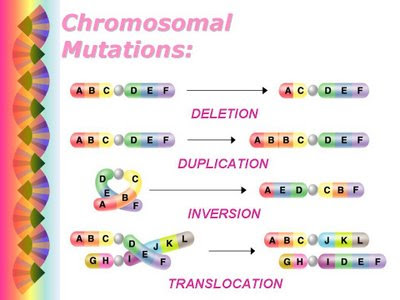
POWER POINT: "BEYOND DARWIN"

Here's a novel thought: instead of being taught as mindless, slavish dogma, evolutionary biologists have been busy in the last 150 years. They've been testing, retesting, modifying and in some cases rejecting aspects of Darwin's theory. This Power Point explains some of the major innovations, which (by the way) are all in the textbook:


Students who need to download the Power Point to complete their notes, and the Lecture Guide based on it, can do so here.

Students must finish these notes right away by completing the Lecture Guide, which has already been given (and partially completed) in class yesterday.   The Lecture Guide will be collected on the day of your final, Biology students, and treated as part of your notes.  Make sure it is completed!


ALSO....There is a Study Session TODAY (Thursday, June 6th) for the FINAL, in Room N-63, between 4:00 and 5:30. Students can earn extra credit in the course and receive helpful hints on how to proceed. Attendance is voluntary.

Tuesday, June 4, 2013

THIS WEEK IN BIOLOGY (June 3rd-8th)


Biology students:   we are winding down the spring semester.   You will have one more lab ("Comparing Primates"), a  Lecture Guide, and then your final.


The Power Point Notes for Human Heredity are available here.


As your syllabus states, the STUDY SESSION for your Final in Biology is after-school, on Thursday, June 7th.   Students will receive a Study Guide prior to that time.   USE YOUR TIME WISELY.


Wednesday, May 29, 2013

BIOLOGY: "CRACKING THE CODE OF LIFE!"


During Tuesday's Biology classes, students were asked to complete a worksheet based on the video 'Cracking the Code of Life.'  The video viewed in class, and thus the handout based on it, can be viewed on-line here:


There is an entire PBS-sponsored web site to accompany this program. It's truly excellent, and since I can't show the entire program within a regular class. I can, however, assign a segment of it along with Section 14.3 of our text to help students understand the material and complete the worksheet. So, read that section, watch video segments 4-8 and complete your work, students!

Thursday, May 23, 2013

FINAL SYLLABUS FOR SPRING 2013, LATEST POWER POINT


The Power Point with the Notes on Biotechnology is available here. All students will need to download the entire Power Point in order to finish the Lecture Guide, so make sure you do it!

Students who have lost their original Lecture Guide and need to get another copy can download the Guide as a PDF file here.

Below you will our final syllabus for this year.   Students, the clock is ticking.  There really isn't much time left.   Make sure you keep your Cornell Notes current!


Friday, May 10, 2013

BIOLOGY: "DARWIN'S DANGEROUS IDEA"

Episodes from PBS's "Evolution" series have been previously featured in instruction.   The centerpiece of that series, a two-hour episode entitled "Darwin's Dangerous Idea", will be shown in class in its entirety over the course of several lessons (we are, in fact, close to completing it).   Students have been given a study guide to this video, which not only uses actors to reenact key events in Darwin's life, but provides vivid demonstrations of Darwin's ideas, and how scientists explore these ideas today.

Students will be expected to complete the study guide based on the video, which will involve writing short responses (1-2 paragraphs) to a series of prompts to specific parts of the video.   As such, they may find it necessary to review the video.  

The paragraphs generated by students will be critical to completing their final quarter project in this course, so it is vital that all students complete the study guide immediately.   The entire video is available through this YouTube channel, broken into 11 segments that roughly correspond wtih the 12 chapters in the assignment.

(For your convenience, I have embedded all 11 videos on this page, but these may not be visible on FUSD computers or on others that do not have recent versions of Java to run flash-based media.  If you are unable to open the individual videos on this post, go to the link above and watch them directly on YouTube)

Chapter 1. Prologue
Chapter 2. Common Ancestry


Chapter 3. Ecuador and the Tree of Life


Chapter 4. Natural Selection


Chapter 5. Mutation and HIV


Chapter 6. Complexity


Chapter 7. How The Eye Evolved


Chapter 8. God


Chapter 9. A Scientist Discusses Religion


Chapter 10. The Human Question


Chapter 11. Humans and The Tree of Life Chapter 12. Epilogue


Finally, here is the PBS web site that accompanies the entire series.
 
You can also watch parts of the videos there, but they are lower in resolution.

Monday, April 22, 2013

THIS WEEK IN BIOLOGY (APRIL 22-27th)

The first, and most important thing is that students this week have a rare opportunity: a Critical CST Review for next week's state test in Biology.

Why is this a rare opportunity? Because students who sign up and attend this Review (on Saturday morning, April 27th), will be able to earn up to 100 points of extra credit in the course.

Students who do not attend this Review are not eligible for this assignment.

Students have been given a blue permission slip to be signed and filled out by their parent or guardian. It should be returned before Saturday to guarantee a place for students. Seating is limited, and on Saturday would be on a first-come, first-serve basis. Students who wish to take advantage of this opportunity would return the permission slip and report at 8:30 to Room N-63 on the Bullard campus. Students will be released at 11:45 that morning.

Please encourage your student to take advantage of this opportunity. In addition to this, Mr. Hatfield's standard policy is that students who earn a score above "Basic" on their Biology CST will qualify for grade change in one or both semester grades. Thus, there is an incentive to help students raise their present grade NOW and an incentive to raise past or present grades in the future.


Meanwhile, back in standard instructional mode, here's the Lecture Notes.


The title, incidentally, is taken from the Daniel Dennett book which also inspired a two-hour episode of the NOVA 'Evolution' series. We will end up seeing much of this episode, broken up into chunks, over the next few weeks, so I thought I would provide a link to view the whole thing on-line, here.

Friday, April 19, 2013

BIOLOGY POWER POINT: "DEEP TIME!"

The Power Point Lecture Notes on 'Deep Time' are available here:

Students who were absent on Thursday and/or Friday's class before last week almost certainly are missing part of these notes.

Mr. Hatfield reviewed the final slides with students in class on Monday of last week, and made sure that they have the Lecture Guide based upon these notes.....


FACT: The fossil record (and other lines of evidence) show us that populations of living things have "changed over time" (evolved)....

QUESTION: How can we explain this pattern of change in terms of NATURAL causes?

Wednesday, April 10, 2013

BIOLOGY: "EXTINCTION!"


EXTINCTION Monday and Tuesday's classes featured excerpts from 'Extinction!', which isNOVA's 'Evolution' series (2001). The video begins with paleontologist Peter Ward hunting for Permian fossils in South Africa's Karoo Desert, and relates ecological pyramids (which are like a 'house of cards') to mass extinctions, which are believed to be rare but important events in the history of life. It then follows the work of American Museum of Natural History researcher Michael Novacek in building the fossil record of small, shrew-like mammals from the Mesozoic, representative of the lineage that will survive the next mass extinction (the K/T event), which will claim the dinosaurs.
Episode 3 from

It concludes with an examination of the role of human activity in accelerating the rate of extinction, with important attention to conservationists like Alan Rabinowitz.


Students have been given a worksheet based upon this video as homework, which is now due. I encourage students to watch the video in its entirety for themselves if there are points that they don't get in class. We simply do not have enough class time to review this, but I know many students will want to see the whole story again, either by going to Google Video or watching it here:


Thursday, April 4, 2013

POWER POINT: DIVERSITY AND CLASSIFICATION

WELCOME BACK FROM SPRING BREAK....


....now the crunch begins, as we survey the final set of State Standards that need to be covered prior to the California State Tests (CST's) later this month.

As we look ahead to preparing for that test, please set aside Saturday morning, April 27th.  

Most of my students will want to consider attending a special Saturday School on that date to prepare for their CST.


These notes were introduced to students before Spring Break, and completed yesterday (April 3rd). The Power Point on "Diversity and Classification" can be uploaded here. The Lecture Guide, given in class today, based on the Power Point can be found as a PDF file here.

A copy of the new syllabus for Unit 8 is found below:


Sunday, March 17, 2013

THIS WEEK IN BIOLOGY: NOTES, STUDY SESSION, TEST

BIOLOGY STUDENTS:  Please notice that this week's test on "Mendel, Meiosis and Mutations" has been moved to Thursday the 21st, which means that our After-School Study Session to prepare for the test begins at 4:15 on Wednesday afternoon in Room N-63.  

Students who attended the Study Session and completed their Cornell Style-Notes typically earned ten percent or higher on the SCANTRON and usually one letter grade, on average, than those who don't.  Thus, students who attend greatly increase their chances of earning a passing grade.

To assist you in preparing for Thursday's test, you will receive another Lecture Guide on "Mutations" this week, along with a Study Guide for Thursday's test.   Students, please plan your time wisely so that you can take advantage of these opportunities to raise your grade.

The last set of Power Point Notes can be found below:


A PDF of the Lecture Guide based upon the Power Point is available here.

Monday, March 4, 2013

BIOLOGY: NEW UNIT, NEW SYLLABUS, NEW NOTES

Students! We are now in a new unit (Unit 7) focusing on genetics and material from Chapters 11 and 12 of our text.

Selected students also have Saturday School this Saturday, March 9th, between 8:15-11:45, in Room N-63.   Failure to attend without a parent contact will be treated as defiance and the student referred.


Meanwhile, here's the new syllabus for this Unit:


The lecture notes for the present unit on Genetics is available at this link. Students will be assigned a 70-point Project, a "Mendelian Genetics" booklet on Tuesday the 5th.  This booklet is due on Tuesday, March 12th.

They may find the notes, as well as their text (Chapter 11) are very helpful in completing this project. They have also received a Lecture Guide in Mendelian Genetics that covers this material, which will be due on Friday, March 8th.

Students who fail to hand in their BOOKLET by Tuesday, March 12th, may have the home contacted.

Friday, February 15, 2013

BIOLOGY: THE NERVOUS SYSTEM!

And, for that matter, the endocrine system as well!

Yes, it's the second group of notes for Unit 6, "Systems for Control and Defense."   That, along with the previous Power Point on Body Systems, will be what is expected to be in student's Cornell Notes on Thursday, Feb. 21st, when they take their first Unit Test of the year.


ALERT!   Students are allowed to use these notes on Thursday's test.....but there is a catch:   the notes need to be in a Composition Book, and the Notes need to be completed, "Cornell style".  

That means they should have original questions and comments in the margins, proper headings on every page (front and back), summaries (in their own words) at the end of each section of notes, and other evidence (highlighting/underlining/drawing etc.) that they have actually reviewed and personalized the notes given in class.  They could reasonably be expected to look something like this.....


Tuesday, February 5, 2013

BIOLOGY: NEW SYLLABUS, "BODY SYSTEMS" NOTES

Biology students: we spent the first two weeks of the spring semester reviewing DNA's structure and protein synthesis, which is found in Chapter 12 of our text. 

We have now begun a new unit on Body Systems for Control and Defense.   Much of this material will be found in Chapters 35, 39 and 40.   Here is the syllabus for this unit, previously distributed in class:


Here are the notes on Human Body Systems that have already been given in class.   Use these to make sure your Cornell Notes are complete!


POWER POINT: THE FLUID MOSAIC MODEL OF THE CELL MEMBRANE

Saturday, December 15, 2012

FINALS WEEK IN BIOLOGY

Parents and Students:
Monday (Dec. 10th) began the final week of instruction for the Fall Semester.  


This is a post to give everybody one last 'heads-up' about Finals week in Biology! 

First of all, 'A Twist of Fate', an important 100-point project, is due on Friday (12/16), and no late work of any kind will be accepted after Monday (12/19)

This assignment is based on a reading describing the scientific detective story that led to the discovery of DNA's structure. The reading is adapted from an article by
Michael Lemonick that appeared in the Feb. 17, 2003 issue of Time. That article can be read in its entirety on-line here.   Students have been given an edited version of that article with terms to be defined and questions to address.   The entire assignment can be found as a PDF file here.

Students are expected to define terms underlined in the article, and to answer four discussion questions according to the usual guidelines: complete sentences that refer to the original question and provide supporting evidence for the student's opinion.  Responses should be typed or word-processed.   It is not, however, necessary to submit the assignment to "Turnitin.com". (The district is no longer supporting this valuable resource, alas)

Secondly, students received a Study Guide for their 200-point Semester Final on Friday (12/14)


Students should be reviewing it and using it to identify any weaknesses, as well as working to submit any other outstanding work in the course by the end of instruction (Monday, 12/17).   Should the student lose this Study Guide, the entire three pages of it can be found as a PDF file here.
 

Next, there will be a Study Session for BIOLOGY after-school on MONDAY (12/17).

This Study Session will take place in my classroom (N-63). It will begin at 4:15 and end at 6:00 that evening.  I would begin sooner on Monday, but an emergency meeting of the Faculty that day requires my attention.   I will be at my room no later than 4:10, however.  I realize it will be dark by the time this session is completed, but I assure parents and students that those who attend these session typically do better on the exams.  And, if that's not enough of an incentive, students who attend not only receive valuable feedback as to what to expect on the test, but can earn up to 20 points of extra-credit. 

The Biology Final is the following day, Tuesday, 12/18.

There is no significant makeup period.  Students need to attend their final exam period if they want significant time for their Final. Those who fail to attend without having their parent or guardian reach a prior understanding with Mr. Hatfield will be given an 'incomplete' in the course.


Finally, the Power Point with notes on DNA and Protein Synthesis is available on-line here:
The Power Point notes are available for download here.

A PDF of the Lecture Guide based on the Power Point notes is available here.

Friday, November 30, 2012

BIOLOGY: MANY IMPORTANT UPDATES


Biology students in Mr. Hatfield's Classes have some pretty important events over the next few days....     Most importantly, they have their first Unit Test in nearly five weeks on Tuesday morning, Dec. 4th!  
To help students prepare for this important Unit Test, students received a three-page Study Guide for this test in class on Nov. 27th, and Mr. Hatfield wants very much for students to use this Study Guide over the weekend to prepare for their test on Tuesday!

The Study Guide, in turn, will form the basis of a Study Session to be held after school on Monday, Dec. 3rd, between 3:15 and 5:30 in Room N-63.   Students who attend and participate will earn EXTRA CREDIT in the course, get their questions based on the Study Guide answered and (if they stay to the end) important hints about the test itself.  

Mr. Hatfield also reminds Biology students that they should be bringing their Composition Books, with their completed Cornell Notes inside.   Students whose Notes are completed, after all, are allowed to use them on the Unit Test!

Speaking of the test itself, Mr. Hatfield wants to remind ALL students that additional time to complete the non-SCANTRON portion of the test is available both during LUNCH and AFTER-SCHOOL.   No student should fail to use all of the time available to them to attempt EVERYTHING on the test.

SATURDAY SCHOOL!

As if Monday's Study Session wasn't enough, Mr. Hatfield is also extending an opportunity for additional support to be held on Saturday, Dec. 1st, in Room N-63, between 8:45 and 11:30.   Students who have been assigned or who have requested to attend Saturday School must show up promptly at 8:45.  They will be focused on doing activities that will earn them EXTRA CREDIT in the course and also help prepare them for Tuesday's exam.

Students who have been assigned Saturday School but who fail to attend without a parent contact may be referred to Administration.


****NOTES NOT COMPLETE?  READ ON!****

You'll find links to the most current set of Notes down here.   The first Power Point contains an outline of photosynthesis, relating it to the 'Great Circle' of chemical reactions that all living things participate it (autotrophs and heterotrophs!), reactions which recycle the raw materials that life requires. Much of this material is covered in the first two sections of Chapter 8 in the Dragonfly Book.


The Power Point for Photosynthesis, Part I, is available here.


Photosynthesis, Part II provides much more detail about the light reactions, photosystems, the proton pumps that use the enzyme ATP synthase, the electron transport chains that help power those pumps. There is less detail about the 'dark reactions' of the Calvin cycle and other material which is not explicitly part of the state standards. This is covered in Section 8.3 of the Dragonfly Book.


You can download Photosynthesis, Part II here.

A third Power Point is somewhat brief, but has many helpful animations that help describe and explain the structure and function of ATP (adenosine triphosphate), the main energy-carrying molecule used by living things.


The fourth and final Power Point in this unit contains information about cellular respiration, including glycolysis (which takes place in the cytoplasm) and the Krebs Cycle (which takes place in the matrix of the mitochondria). The electrons produced in the Krebs Cycle move through the inner membrane, or cristae, of the mitochondria. The motion of these negatively-charged particles attracts protons (H+), and eventually a high concentration of protons within the membrane is available to drive 'proton pumps' that power an enzyme, ATP synthase, leading to the production of more ATP:


You can download the Power Point for Cellular Respiration here.


Friday, October 5, 2012

BIOLOGY POWER POINT: "THE CHEMISTRY OF LIFE"

Here is the Power Point on 'The Chemistry of Life.'    This is the last section of notes for Unit 2.   Our after-school Study Session to prepare for Wednesday's Unit 2 Test will begin at 4:00 in Room N-63 on Tuesday afternoon, Oct. 9th.  

To help students compare their notes and insure their Cornell-style composition books are completed and perfected, students received a Lecture Guide based on this Power Point in Friday's class.


Thursday, September 20, 2012

POWER POINT: "ATOMS AND MOLECULES"

. For all of Mr. Hatfield's Classes, because ALL scientists (and thus, ALL of my students) have to know about atoms and molecules!


Students should use these Power Points to complete their Lecture Guides, and use both items to make sure that their Cornell Style Notes are complete and perfected!   So, in case you haven't completed this item, for all my classes, here are the notes on 'Atoms and Molecules.'


****UPDATE****

Thursday, September 13, 2012

THE LIVES OF THE STARS


The following episode of Carl Sagan's Cosmos, 'The Lives of the Stars', forms the basis of a student homework assignment. Click on the icon below to play the video within the blog:


The following episode of Carl Sagan's Cosmos, 'The Lives of the Stars', forms the basis of a student homework assignment. Click on the icon below to play the video within the blog:


You can also go to Snag Films directly here.

Wednesday, September 12, 2012

HOW TO "COPE" WITH TESTS IN MR. HATFIELD'S CLASSES

Tomorrow, Biology students will have their first tests returned to them. Results of that test were mixed, and often not what they could have been, due to poor student CHOICES.

Students who earn a percentage score higher than that earned on the first test can not only expect to earn a higher grade, but they are eligible for grade change on their previous test.

To achieve that, students need to consider the following, using the anagram 'COPE'.

C....(ontent)

Students need to know what's on the test. To make sure that students know what content will be covered on the exam, they need to obtain a copy of the Study Guide, which becomes available the weekend before the test. The sooner they get this, the better!

O....(rganization)

Students need to plan their time. For the next test, there will be a Study Session after school on the day before the exam (date to be announced later this week). They earn points by attending, and get valuable feedback about what is likely to be covered. In addition to attending the Study Session, students need to consider using time on lunch or after-school on the day of their exam as needed to complete their test. Plan ahead, students!

P...(reparation)

Students need to provide evidence that they have prepared for the test. One way to do this is to attend the Study Session before the next test (date to be announced later this week). Another, powerful way is to make sure that they bring their COMPLETED Cornell Notes to class on the day of the exam. Cornell Notes, if completed, have questions and comments in the margins and summaries of the major sections. Students who have these items completed will be allowed to use them throughout the exam. Bring evidence that you have prepared for the test, students, and you will be rewarded!

E...(ffort)

Students need to finish what they start. There is nothing more important than giving our best effort, all of the time. On an exam day, a good effort means that students attempt everything, even if that means they need to come back at lunch or after school. Show a work ethic, students, and you will not only do better on the test....you will do better in every aspect of your life.

PARENTS, ENCOURAGE YOUR STUDENT TO USE THESE STRATEGIES TO EXCEL!

Friday, August 31, 2012

LECTURE GUIDE: THE NATURE OF SCIENCE


This post contains the Power Point notes for "The Nature of Science" given in BOTH Mr. Hatfield's Biology AND Environmental Science classes..........


Students in both classes should make sure that their Cornell Style Notes are completed and perfected in their composition books, for two reasons:  1)  their comp books will from time to time be graded; 2) their comp books, if complete, may be used on exams.

To help make sure students complete their Notes, Mr. Hatfield makes them available for download through the class blog and also gives assignments (Lecture Guides) based on the lectures which students can compare with their comp books.

NOTE:   Usually Biology and Environmental Science will have different notes.   In this case, they are the same, because discussions of scientific method and the nature of science are generic.  They are likely to cover almost identical material in the same sequence in high school courses.


Students! Here is the Power Point for the notes on 'The Nature of Science'. You will receive a Lecture Guide based on these Notes sometime this week! If you don't have Power Point on your computer, don't worry . . . you can download a free program, Power Point Viewer, to see the notes!


KEEP IN MIND...this year, in Mr. Hatfield's Classes, we will try to reduce the amount of class time spent taking notes. There are dozens of standards to cover, hundreds of vocabulary terms and other items to master. We need to decrease the amount of time spent in lecture so students can have more time to do activities. Remember: we want to engage as many different parts of the brain as possible, and to do that, we need to have more time to do things other than notes.


At the same time, your Cornell Notes must be complete (all the notes, original questions and comments in the margins, your name/date/course on every page, and summaries of major sections of notes). Therefore, it is the student's responsibility to download and complete any notes that they were not able to finish in class!!